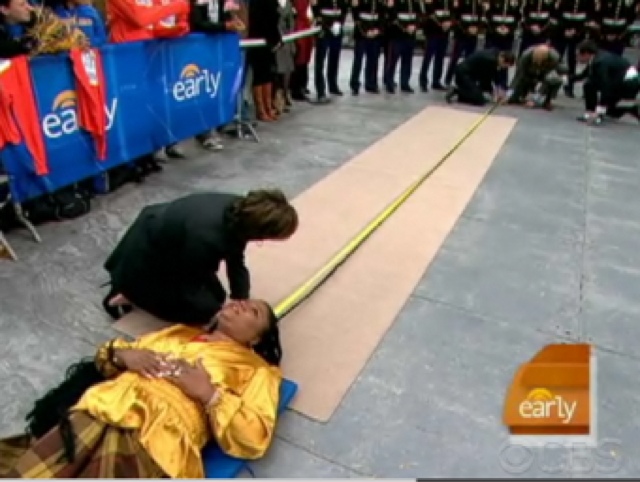
LONGEST DREAD LOCK......BY ASHA
Here’s some inspiration for any of my rastabellas who are growing longer locks — Trinidad-born Asha Mandela is vying for a spot in the Guinness World Book of Records as the proud owner of the world’s longest dreadlocks. Her longest lock measures eight feet 9 inches long!
Now THAT is commitment.
I immediately identified with Asha’s hair journey, as reported by the Orlando Sentinel :
“Originally from Trinidad, Mandela started growing her dreads when she decided to stop using chemicals on her hair while she was living in Brooklyn, N.Y. She cut it all off and, as it grew back, began corkscrewing it into curls that in turn were twisted together into dreadlocks. Before her dreads were long enough to hang down, they stuck out from her head like long black fingers.
She sent her mother a picture. Her mother said not to send any more.
“She said, ‘I took such good care of your nice curly hair, and this is what you are doing with it?’ ” Mandela recalled. “She called it a mop for five years.”
I wonder if Asha’s mom has come to terms with her daughter’s hair, now that she’s grown her locs to such an impressive length?
Reportedly Asha washes her hair once a week at the most :
“Mandela said says she “used to wash it three times a week. Now I do it once a week. It’s very tiring. Sometimes I don’t have the energy.”
It takes one bottle of shampoo and one bottle of conditioner every time she washes her hair and can sometimes take days to fully dry after she washes it.”
And being the product junkie that I am, I’m wondering — what kind of shampoo and conditioner does Asha use?
I thought it was really interesting that her hair growth wasn’t motivated by religious reasons. It was a desire to celebrate her natural beauty.
Asha broke away from the hairstyling methods she was taught to find her own expression of beauty. I applaud that and wish her all the best!
Congrats Asha,on your Guinness world RECORD!
B.O.MAG IS YOUR GUIDE TO ALL THINGS BEAUTIFUL *HEALTH NEWS AND ADVICE BY THE PROFESSIONALS *SKINCARE & BEAUTY TIPS *FLATTERING HAIRSTYLES *WELLNESS TIPS *FOOD & DRINKS *LIFESTYLE & FASHION TRENDS *LATEST BEAUTY BRANDS *EVENTS *CELEB BEAUTY LOOKS AND FINDS.......your luxury guide
Thursday, 21 March 2013
Saturday, 16 March 2013
How to shape a woman's waist!
WOW 61 year old Woman with the smallest waist in the world......GUINNESS BOOK OF RECORD WINNER!!!
Smallest Waist On A Living Person
Name: Cathie Jung
Record-Winning Age: 61 (approx.)
Award Date: 1999
This was no gift of nature. According to Cathie Jung's official web site, her tiny waist is the result of years of patience, dedication and the constant use of a corset. Jung won the Guinness World Record in 1999 when she corseted herself down to a 15-inch waist -- without the corset, she plumps back up to a 21-inch waist.
WOMAN WITH THE LONGEST NAILS IN THE WORLD *hats off*
Smallest Waist On A Living Person
Name: Cathie Jung
Record-Winning Age: 61 (approx.)
Award Date: 1999
This was no gift of nature. According to Cathie Jung's official web site, her tiny waist is the result of years of patience, dedication and the constant use of a corset. Jung won the Guinness World Record in 1999 when she corseted herself down to a 15-inch waist -- without the corset, she plumps back up to a 21-inch waist.
WOMAN WITH THE LONGEST NAILS IN THE WORLD *hats off*
Friday, 15 March 2013
Health1st .....Just Ask us??? On Call physician - Dr OJia Ademolekunof "Quick Medical Consult"
It's all about your Health and there's nothing like a doctor that's there for you ,when you really need one.. Our in-house physician DR OJIA ADEMOLEKUN of QUICK MEDICAL CONSULT is here for you.
Send us your health questions like you always do.You can remain Anonymous or include a first name ,so as to identify you with the answers...Pls share with your friends too. Don't forget your HEALTH COME's 1st !
JUST ASK US ???
Post your questions below.
Send us your health questions like you always do.You can remain Anonymous or include a first name ,so as to identify you with the answers...Pls share with your friends too. Don't forget your HEALTH COME's 1st !
JUST ASK US ???
Post your questions below.
Wednesday, 13 March 2013
Heat and Heat stroke....Stay Hydrated!
Lets Beat the Heat Guys!
There are between 175 and 1250 heat deaths each year in the United States,imagine the number in humid African countries?Nigeria to be precise. Yes! heat does kill and it happens Worldwide! Most of these deaths result from a general lack of knowledge about how and when heat injuries occur and how they should be treated.
The heat is on!!!
Our bodies produce and maintain heat, even in excessively hot conditions. Our natural method for cooling off is sweat, which is best evaporated by low humidity and wind. But stagnant, humid air makes sweating (cooling) less effective. As our cooling sytem begins to fail, our body (much like a car) begins to overheat, which can lead to heat stroke or heat exhaustion.
What is heat stroke?
Heat stroke is the most serious of heat illnesses and is caused by a body temperature of 105° F or more, where your bodily cooling process fails; mental impairment and death can result. Most cases occur without warning, and a few cases progress from lesser heat injuries, such as heat exhaustion. The classic signs (fever, sluggishness, confusion, and hot and dry skin) may not be present. Heat stroke can damage vital organs, such as the liver, kidneys, and brain.
There are two categories of heat stroke: classic heat stroke and exertional heat stroke. Classic heat stroke mostly affects the elderly, chronically ill, those who do not exercise, and people taking certain medications (such as psychiatric drugs, decongestants, some blood pressure pills, diuretics, and antihistamines). This type of heat stroke is seen during heat waves in unaccustomed areas.
Exertional heat stroke occurs mostly in younger individuals who are strenuously exercising or working in hot conditions. This type of heat stroke results from increased heat production and may cause organ damage.
Preventing heat injuries
Most heat injuries can be prevented by knowing the risk factors. They include dehydration, heavy clothing, prolonged exertion (athletics, military exercises, outdoor work), poor conditioning, lack of adaptation, obesity, sleep deprivation, alcohol, poor living conditions, aging, chronic (long-lasting) disease, saunas, and some medications. A major risk factor is a prior heat stroke, which makes you more susceptible to having another one.
Dehydration is avoided by drinking cool water before and during heat exposure (11/2 to 2 cups before, then 1 cup every 20 minutes during heat exposure). Sports drinks that are too sweet, which can interfere with fluid absorption, may be diluted to half strength by adding water. Work and rest cycles can prevent overexertion. During summer sport training programs, the hydration of athletes should be monitored with practice weigh-ins and weigh-outs; athletes who have lost excess water weight (2-3% of body weight) are at higher risk for a heat injury. Despite popular belief, salt tablets should be avoided. Clothing should be loose, breathable, and light in color, and activities should be planned for cooler morning or evening hours whenever possible.
Acclimatization through gradual, daily exposure to heat reduces most forms of heat illness. This natural adaptation takes 10 to 14 days and allows your body to cool off more efficiently. The effects are not permanent, however, and modest continued exposure is needed to maintain them.
Minor heat illnesses, such as heat cramps (cramps in large working muscles), heat edema (swollen feet or ankles), and heat syncope (fainting), do not cause lasting effects and are usually avoided by limiting exposure and becoming acclimatized.
Heat exhaustion
Heat exhaustion, although not as dangerous as heat stroke, is a serious injury. It can progress to heat stroke if not treated immediately. Heat exhaustion itself does not cause damage to vital organs, nor does it cause mental impairment. The body temperature of someone suffering from heat exhaustion is less than 102°F. Symptoms include sweating, headache, dizziness, nausea and vomiting, muscle weakness, cramps, and blurry vision. Dehydration and chronic salt depletion can cause this illness.
How do I treat heat exhaustion?
First, the victim is removed from the hot environment. Then, the victim is cooled off, as with heat stroke. Finally, fluids must be replenished.
Sun illnesses
Our sun emits radiation, and fortunately most harmful radiation is absorbed by the atmosphere. Of the remaining radiation, ultraviolet radiation (UVR) causes the most problems. UVR levels are highest during summer months, especially between 9:00 a.m. and 3:00 p.m. UVR passes through clouds, even causing sunburn on a cloudy day. Environmental factors such as snow, sand, and water reflect UVR and can increase exposure.
There are between 175 and 1250 heat deaths each year in the United States,imagine the number in humid African countries?Nigeria to be precise. Yes! heat does kill and it happens Worldwide! Most of these deaths result from a general lack of knowledge about how and when heat injuries occur and how they should be treated.
The heat is on!!!
Our bodies produce and maintain heat, even in excessively hot conditions. Our natural method for cooling off is sweat, which is best evaporated by low humidity and wind. But stagnant, humid air makes sweating (cooling) less effective. As our cooling sytem begins to fail, our body (much like a car) begins to overheat, which can lead to heat stroke or heat exhaustion.
What is heat stroke?
Heat stroke is the most serious of heat illnesses and is caused by a body temperature of 105° F or more, where your bodily cooling process fails; mental impairment and death can result. Most cases occur without warning, and a few cases progress from lesser heat injuries, such as heat exhaustion. The classic signs (fever, sluggishness, confusion, and hot and dry skin) may not be present. Heat stroke can damage vital organs, such as the liver, kidneys, and brain.
There are two categories of heat stroke: classic heat stroke and exertional heat stroke. Classic heat stroke mostly affects the elderly, chronically ill, those who do not exercise, and people taking certain medications (such as psychiatric drugs, decongestants, some blood pressure pills, diuretics, and antihistamines). This type of heat stroke is seen during heat waves in unaccustomed areas.
Exertional heat stroke occurs mostly in younger individuals who are strenuously exercising or working in hot conditions. This type of heat stroke results from increased heat production and may cause organ damage.
Preventing heat injuries
Most heat injuries can be prevented by knowing the risk factors. They include dehydration, heavy clothing, prolonged exertion (athletics, military exercises, outdoor work), poor conditioning, lack of adaptation, obesity, sleep deprivation, alcohol, poor living conditions, aging, chronic (long-lasting) disease, saunas, and some medications. A major risk factor is a prior heat stroke, which makes you more susceptible to having another one.
Dehydration is avoided by drinking cool water before and during heat exposure (11/2 to 2 cups before, then 1 cup every 20 minutes during heat exposure). Sports drinks that are too sweet, which can interfere with fluid absorption, may be diluted to half strength by adding water. Work and rest cycles can prevent overexertion. During summer sport training programs, the hydration of athletes should be monitored with practice weigh-ins and weigh-outs; athletes who have lost excess water weight (2-3% of body weight) are at higher risk for a heat injury. Despite popular belief, salt tablets should be avoided. Clothing should be loose, breathable, and light in color, and activities should be planned for cooler morning or evening hours whenever possible.
Acclimatization through gradual, daily exposure to heat reduces most forms of heat illness. This natural adaptation takes 10 to 14 days and allows your body to cool off more efficiently. The effects are not permanent, however, and modest continued exposure is needed to maintain them.
Minor heat illnesses, such as heat cramps (cramps in large working muscles), heat edema (swollen feet or ankles), and heat syncope (fainting), do not cause lasting effects and are usually avoided by limiting exposure and becoming acclimatized.
Heat exhaustion
Heat exhaustion, although not as dangerous as heat stroke, is a serious injury. It can progress to heat stroke if not treated immediately. Heat exhaustion itself does not cause damage to vital organs, nor does it cause mental impairment. The body temperature of someone suffering from heat exhaustion is less than 102°F. Symptoms include sweating, headache, dizziness, nausea and vomiting, muscle weakness, cramps, and blurry vision. Dehydration and chronic salt depletion can cause this illness.
How do I treat heat exhaustion?
First, the victim is removed from the hot environment. Then, the victim is cooled off, as with heat stroke. Finally, fluids must be replenished.
Sun illnesses
Our sun emits radiation, and fortunately most harmful radiation is absorbed by the atmosphere. Of the remaining radiation, ultraviolet radiation (UVR) causes the most problems. UVR levels are highest during summer months, especially between 9:00 a.m. and 3:00 p.m. UVR passes through clouds, even causing sunburn on a cloudy day. Environmental factors such as snow, sand, and water reflect UVR and can increase exposure.
Should Freebie Friday stay or do we Cancel it???
Hello everyone ,we would like to know your opinions regarding our B.O.MAGAZINE's FREEBIE FRIDAY ,should it stay or Do we cancel it???
Monday, 11 March 2013
Bom's Health 1st-Ask us???
B.O.Magazine's Health 1st !
Ask Us???
Your questions have been answered!
1. Can you get STDs from giving oral sex?
Yes, absolutely! If you're having unprotected oral sex you're at risk for becoming infected with any sexually transmitted infection, including HIV, Herpes, HPV, Gonorrhea, Syphilis, Hepatitis B, and Chlamydia. Using male or female condoms and dental dams definitely lowers your risk, but they don't fully protect you against all of the STDs. For example, HPV is spread by direct skin to skin contact. If you perform oral sex on your sexual partner(s), tell your health care provider. He/she may want to discuss any additional screenings you might need. Ask your health care provider about getting vaccinated against HPV and Hepatitis A and B.2. How do I know if I'm a virgin?
It's really not too complicated. You're a virgin if you've never had vaginal intercourse with a partner. It doesn't matter if you've used tampons, masturbated, or if you've had an injury to your vulva. You're still a virgin until you have vaginal intercourse with someone else.3. I exercise and eat pretty healthy, but I'm still overweight. Why?
I exercise 3 times a week for an hour and eat a pretty healthy diet, but I'm still overweight. Why can't I lose weight?
Losing weight is really hard for many people. Since there are lots of reasons why people who have healthy habits can't lose weight, it's best to talk with a health care provider such as a doctor or dietitian about your situation, If a detox health plan or cleansing either by colon or orally . Your health care provider may recommend that you make some changes in your habits (such as eating smaller portions or exercising more often). Your health care provider may also tell you that your weight is perfectly healthy for you and that you don't actually need to lose weight.4.What's the best cure for severe cramps during my period?
If you're having menstrual cramps, talk with your parents or health care provider about your options. If your menstrual cramps are painful, you may think about taking some type of the over-the-counter medication for 1 to 2 days. These medications are called "anti-prostaglandins". They help relieve the discomfort, make your flow lighter, and cause your uterus to cramp less. Look for over-the-counter medications that contain ibuprofen or naproxen sodium. Take this medicine when you first start to feel uncomfortable, and continue taking it every 4-6 hours or as recommended by your health care provider. Since this kind of medicine can upset your stomach, you should take it with food. Make sure you read the label to see how much and how often you should take the medication. You should not take these products if you are allergic to aspirin-like medicine or have stomach problems. It's important not to take more medicine than is recommended or prescribed.Natural remedies such as a microwavable warm pack or a heating pad placed on your abdomen (lower belly) may help too, just make sure it's not too hot. Soaking in a warm bath may also relieve uncomfortable cramps. Some teens find that increasing their physical activity helps; others find that resting quietly for short periods of time helps.
If your menstrual cramps are not relieved by over-the-counter medicine, make an appointment to see your health care provider. Use a calendar to keep track of your period and symptoms and bring it with you to your next medical appointment. This can help your health care provider figure out the best treatment choices for you.
6. How can I tighten my breasts?
Breasts come in shapes and sizes, and heredity is the
biggest factor that determines the size, shape, and firmness of a
woman's breasts. There are no creams or lotions that can tighten breast
tissue, and there's no specific evidence that proves that a certain type
of exercise firms sagging breasts. That being said, large breasts can
cause backaches, so wearing a well-fitting bra can provide support that
may help. Talk to your health care provider for other suggestions.
7. Are you still a virgin if you masturbate?
Yes, you are still a virgin until you have vaginal
intercourse with a partner. For the record, masturbation is normal and
is a natural way to learn about your body and find out what feels
sexually satisfying.
8. I had sex with my girlfriend while she was on her period, will I be affected with any diseases?
You will likely be fine if you and your partner practiced safe sex. But remember, anytime you have sex you may be exposed to STIs. If you used a male or female condom, your risks are less, but still there.
Safe sex is important ALL the time. When
a girl is on her period, sexually transmitted infections such as HIV
and Hepatitis (that are carried in the blood) are spread especially
easily through contact with infected blood.
Also, when a girl is menstruating, she has a higher risk
for developing pelvic inflammatory disease (PID) from gonorrhea or
Chlamydia infections.
One last thing... Don't take for granted that your
girlfriend won't get pregnant while she is on her period. It's still
possible, unless she is using birth control pills or another effective
hormone method.
Always practice safe sex!
9. Are stretch marks on the hips, thighs, and breasts normal?
Stretch marks on the hips, thighs, and breasts are very
common and completely normal. They often appear during puberty,
pregnancy, or with rapid weight gain or weightloss. Stretch marks will usually fade
over time and will usually match your normal skin color usually within 1
to 2 years.
10. What should I do to increase my energy levels?
Here are some smart tips that will help to improve your energy levels:
- Eat three nutritious meals a day and 2-3 healthy snacks in between: Food is your body's fuel, so just like a car, you body needs good food to make it run efficiently!
- Start the day with breakfast: Be sure to eat protein with whole grains.
- Bring a health lunch/snacks to school/work: Use a portable cold pack and bring a yogurt, string cheese, or meat (such as grilled chicken).
- Drink water: Have 8-10 glasses each day.
- Decrease stress: Learn ways to manage and avoid stress whenever possible. Find out about exercising, yoga, and meditation, and you can also write in a journal.
If your symptoms don't lessen in 2 weeks or more, you should make an
appointment with your doctors to make sure you don't have a
medical reason for feeling tired.
For more info ,kindly post more of your questions on our blog. Dont forget
'YOUR HEALTH COMES 1ST'
Subscribe to:
Posts (Atom)